
Curved Treadmill Manufacturer Insights: Choosing Quality for Your Fitness Journey
2026-05-10
When it comes to upgrading your home or commercial gym, the curved treadmill stands out as a game-changer—blending natural movement with intense workouts. But with so many manufacturers flooding the market, how do you separate quality craftsmanship from flashy gimmicks? That’s where Yingruis comes in. In this guide, we’ll dive into the key factors that set elite curved treadmills apart, straight from a manufacturer that knows the science behind every stride. Whether you’re a fitness enthusiast or a gym owner, these insights will help you make a choice that powers your journey forward.
What Sets Curved Treadmills Apart from Traditional Options
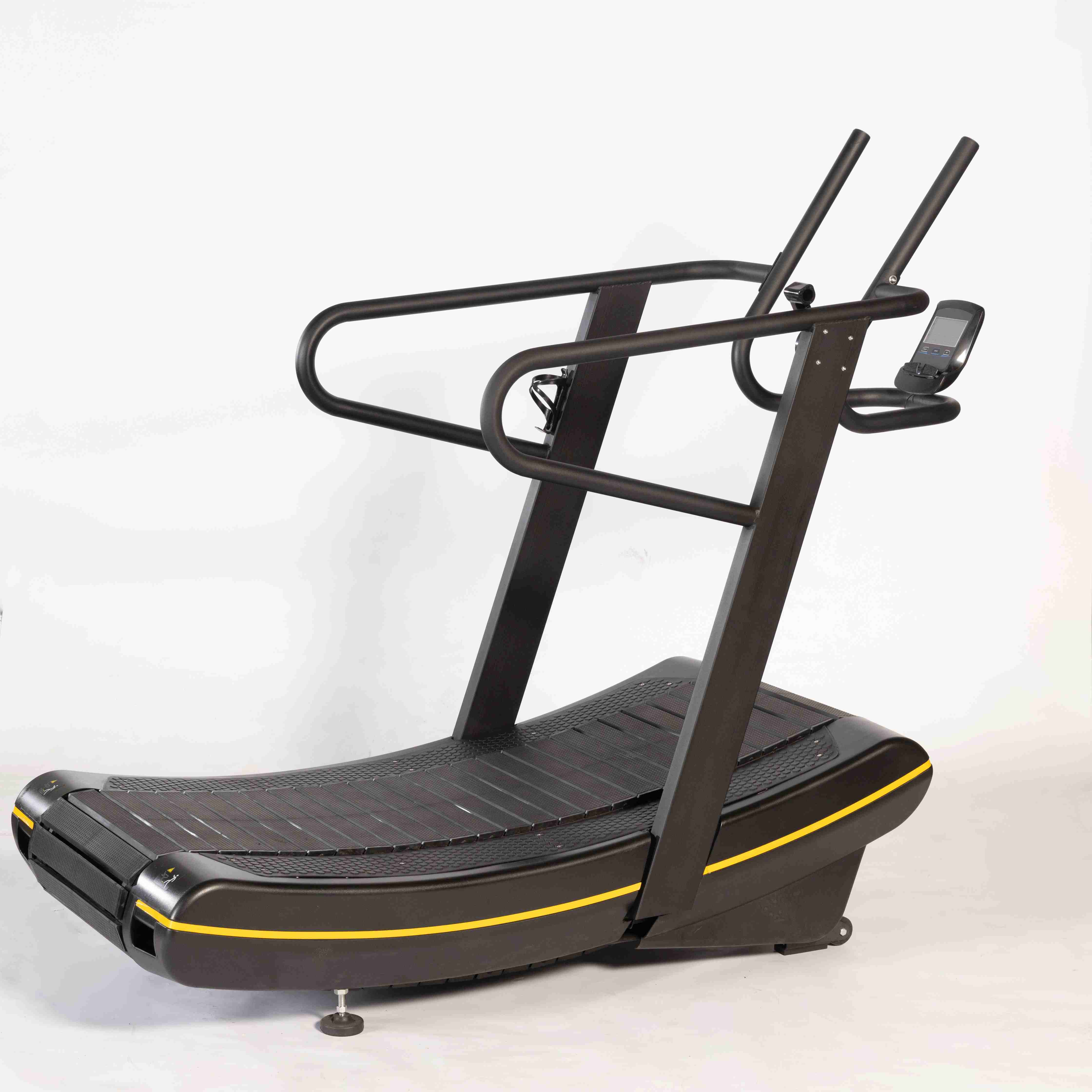
Unlike flat motorized decks, curved treadmills rely entirely on your own effort. There's no motor setting the pace—you push the belt back with each stride, and the curve naturally guides your foot into a more efficient landing position. This self-powered design means you control every aspect of your run, from acceleration to deceleration, without ever reaching for buttons or scrolling through menus.
The shape of the deck also changes how your body moves. Traditional treadmills often encourage a slightly awkward, heavy heel strike, but the concave surface promotes a midfoot or forefoot strike instead. This shift not only feels more like running outdoors but also engages your posterior chain—glutes, hamstrings, calves—much more actively. Many runners find they can maintain better posture and reduce unnecessary impact on their joints over time.
Another key difference is energy demand. Because you're driving the belt yourself, there's no motor doing part of the work for you. Studies show that at the same perceived speed, exercisers burn more calories on curved machines. That makes them a popular choice for high-intensity interval training, athletic conditioning, and anyone looking to maximize the efficiency of a limited workout window.
Key Materials That Define Long-Lasting Performance
The backbone of any product that endures the test of time lies in the selection of raw inputs that resist wear without compromising on feel. High‑grade stainless steel alloys, for instance, are often chosen not just for their corrosion resistance but for how they maintain structural integrity under repeated stress cycles. These metals are treated with proprietary hardening processes that push surface durability beyond standard thresholds, ensuring that even after years of daily use, the core performance remains indistinguishable from day one.
Equally critical are the polymers and elastomers that absorb shock and seal out moisture. Advanced thermoplastic polyurethanes, with custom‑formulated molecular chains, offer a rare combination of flexibility and toughness — they stretch without deforming and rebound instantly, even in extreme temperature swings. Meanwhile, gasket materials derived from aerospace‑grade silicones create impermeable barriers that prevent dust and liquid ingress without stiffening over time, a common point of failure in lesser‑built alternatives.
Surface treatments often separate good from great. Physical vapor deposition (PVD) coatings, applied atom by atom, create an armor‑like layer that resists scratches and fading while preserving the tactile warmth of the base material. Similarly, chemically bonded ceramic layers can reduce friction at microscopic contact points, quietly extending the lifespan of moving parts without the need for liquid lubricants that degrade. These material choices aren’t made from a spec sheet alone; they come from decades of iteration and a refusal to accept the ordinary.
The Role of User Comfort in Daily Training Sessions
When you settle into a training session, the last thing you want is to be distracted by a stiff chair or a glare on your screen. Ease isn’t just a luxury—it shapes how well you absorb new skills. Small adjustments, like proper lighting or a supportive seat, can turn a tedious drill into something you actually look forward to. It’s the difference between enduring a workout and engaging with it.
Physical comfort often gets the spotlight, but mental ease plays a quiet, powerful role. If an app’s interface feels clunky or instructions are muddled, frustration builds before any real progress happens. A clean layout and clear, calm guidance let users stay in the flow, reducing the urge to quit. When the tools feel invisible, the focus lands squarely on growth.
Over time, these details stack up. A routine that respects your comfort becomes sticky—you return to it without bargaining with yourself. Think of the worn yoga mat that feels just right, or the app that remembers your pace. Those tiny nods to personal ease aren’t coddling; they’re the backbone of lasting habits.
Evaluating Manufacturing Precision and Attention to Detail
Precision in manufacturing isn’t just about hitting tight tolerances—it’s the quiet choreography of every component aligning exactly as intended, time after time. When evaluating this aspect, you look beyond the final measurements and into the consistency of the process itself. Are the edge finishes uniform across hundreds of units, or do subtle burrs hint at tool wear? Does the color match hold under different lighting, or is there a drift that only a trained eye would catch? True precision leaves a trail of evidence: the crisp snap of a well-machined connector, the effortless glide of a slider without lubrication, the way seams disappear almost imperceptibly. It’s the difference between something that merely functions and something that feels inherently right in your hands.
Attention to detail, meanwhile, is the quieter force that elevates a product from decent to exceptional. It lives in the places most people don’t consciously look—the absence of sink marks on an internal bracket, the perfectly deburred holes that no one will ever praise, the threads that engage smoothly on the first turn instead of the third. Evaluating this means getting curious about the invisible: how the factory handles parts between operations, whether protective films are applied before assembly, if the packaging itself prevents micro-scratches during transit. This mindset separates brands that “meet spec” from those that respect the end user enough to ensure nothing rattles, snags, or feels cheaper than expected even after years of use.
To truly assess both, you need to go beyond the standard audit checklist. Observe how operators handle components with their fingertips, not just how they record numbers. Watch for small rituals—like a line stop to clean a sensor before it triggers a false reading. Ask about the stories behind rejected batches; often, the real insight isn’t in the defect rate but in the rationale for borderline cases. Products that emerge from a culture of precision and attention don’t just perform better—they communicate care, and that’s something no inspection report can fake.
How Innovative Features Transform Your Workout Routine
Gone are the days when a workout meant monotonously counting reps or guessing if you’re pushing hard enough. Today’s fitness gear packs sensors that read your muscle activity, heart rate variability, and even skin temperature, painting a real-time picture of your effort. This data doesn’t just sit in an app; it actively adjusts your session on the fly. If your form slips during a deadlift, a gentle buzz on your wrist nudges you back into alignment, turning every minute into a coached, dynamic experience.
The real magic happens when these features learn your rhythms. Over time, the system spots patterns—like how your endurance peaks on Tuesday mornings or how a certain playlist pushes your pace. It then weaves those insights into a plan that fits your life, not a generic template. On a day when your body signals burnout, it might swap a punishing interval run for a recovery-focused yoga flow. The routine evolves with you, making “plateau” a thing of the past.
What truly sets this apart is how it demystifies progress. Instead of waiting weeks to notice a change, you get instant feedback on metrics like power output or breathing efficiency. That little screen on the handlebar or mirror doesn’t just show numbers; it translates them into actionable cues—maybe a visual bar that fills up as you nail each rep, or a subtle tone that deepens your inhale. It’s like having a trainer who never blinks, but feels surprisingly personal.
Balancing Initial Investment with Lifelong Reliability
Spending less upfront often feels like a win, but the real cost emerges over time through unexpected breakdowns and frequent part replacements. A low purchase price rarely factors in the value of consistent performance or the peace of mind that comes from knowing your equipment won’t fail when you need it most. In many industries, the initial savings evaporate quickly once maintenance and downtime start chipping away at the budget.
Choosing a system built to last means accepting a higher starting figure while drastically lowering the chances of future headaches. It’s not just about avoiding repairs—it’s about maintaining steady productivity and keeping long-term expenses predictable. When you depend on machinery for daily operations, a small upfront premium buys years of uninterrupted service that no discount can retroactively provide.
The trick lies in evaluating how each dollar spent now translates into reduced risk later. Smart buyers look past the sticker price and ask how a purchase will age under real conditions. By weighing the lifetime reliability against the immediate cost, the choice becomes less about price tags and more about securing consistent value year after year.
FAQ
It relies on your own leg power instead of a motor. The belt glides over a curved frame and responds to your stride, so you control the speed naturally—no buttons needed. This means you engage more muscles and burn extra calories compared to being pulled along by a motor.
If you want a low-maintenance, energy-efficient machine that mimics outdoor running more closely, it’s a solid pick. You skip electricity costs, reduce mechanical failures, and get a tougher workout in less time. Plus, it’s quiet enough for apartment living.
Look beyond flashy marketing. Check the bearings and belt material—industrial-grade sealed bearings and a durable slat belt are non-negotiable. Ask about warranty length on the frame and moving parts. A transparent manufacturer will gladly share details about their engineering process and real-world testing.
Focus on a sturdy frame that doesn’t wobble during sprints, a smooth ball-bearing system that feels effortless, and a belt that tracks straight without constant adjustment. Handlebars should be at a comfortable height, and the console—if any—should be minimal, because you’ll be too busy running to stare at screens.
Absolutely. Beginners can walk at low resistance to build stability, while elite athletes use them for high-intensity intervals. The learning curve is short; you just find your rhythm. Many people actually feel safer because the belt stops moving the moment you do.
It naturally promotes a forefoot strike and upright posture, reducing impact on joints. Studies show you can torch up to 30% more calories per session than on a flat motorized treadmill at the same perceived effort, since you’re driving the belt yourself and recruiting more stabilizer muscles.
Conclusion
Choosing a curved treadmill means stepping away from the conventional motor-driven design and into a workout shaped entirely by your own movement. Unlike flat-belt machines that dictate pace through buttons and programs, a curved deck responds to every stride, encouraging a natural gait and engaging more stabilizing muscles. This self-powered mechanism is what truly sets these machines apart, but the difference goes beyond mechanics. Long-term satisfaction hinges on the materials buried beneath the surface—high-grade steel frames that resist flexing over thousands of miles, thick rubber slats that absorb impact without degrading, and precision bearings that keep the belt gliding smoothly even under punishing daily use. Attention to detail during manufacturing is non-negotiable; even slight misalignments in roller placement or deck curvature can amplify wear and compromise safety. The best manufacturers treat every weld and joint as a point of potential failure, inspecting each unit as if it were going into their own training facility.
Daily training sessions demand more than durability—comfort defines whether an athlete sticks with the routine or walks away. A thoughtfully sculpted curve reduces stress on the knees and hips, while side rails placed exactly where you need them provide confidence during high-intensity intervals. Beyond the frame, innovation transforms the experience: integrated performance monitors that don’t require fumbling with wires, belt textures that grip without excessive abrasion, and quiet operation that makes early-morning workouts feasible in a home gym. All these features meet at the question of value. A low upfront cost often masks compromises in components that fail sooner, leading to costly repairs or replacement. Conversely, a higher initial investment in a meticulously built curved treadmill pays off in years of consistent performance, fewer interruptions, and workouts that truly adapt to your progression. It’s a balance worth scrutinizing—one where reliability, comfort, and intelligent design justify every dollar spent.
Contact Us
Contact Person: Owen Wu
Email: [email protected]
Tel/WhatsApp: 86-15376736259
Website: https://www.yingruisfit.com/