
China Curved Treadmill: How This Innovative Fitness Machine Enhances Your Running Experience
2026-05-12
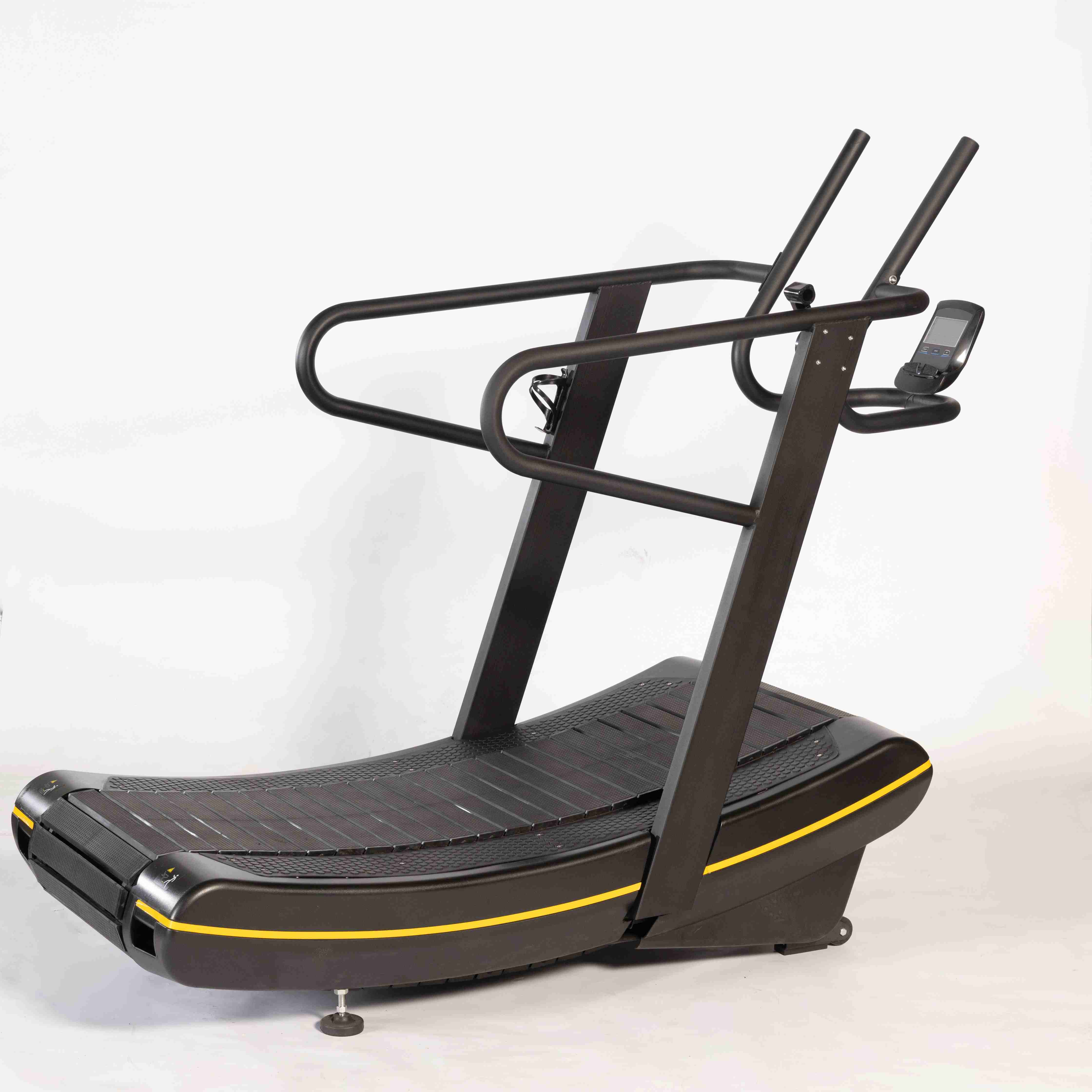
Running on a flat treadmill can feel monotonous, but what if your machine could mimic the natural motion of outdoor sprints? China's curved treadmill revolution is reshaping indoor running, and Yingruis is at the forefront. By ditching the motor and embracing a curved deck, this innovative gear challenges your form, torches calories, and keeps every stride engaging. Ready to discover how it transforms your workout? Let's dive in.
Running That Feels Effortlessly Natural
The first time you slip on a pair of shoes designed for fluid motion, you understand what it means to move without resistance. There’s a subtle harmony between your stride and the ground—no forced adjustments, no jarring impact. It’s the kind of run where your breathing settles into a calm rhythm and your thoughts drift far beyond your pace or distance. You aren’t fighting your own body weight or the shoe’s stiffness; you’re simply gliding, as if running were your most fundamental state.
This sensation isn’t just about cushioning or flexibility—it’s about how the shoe becomes an extension of your foot. The midsole responds just enough to spring you forward, while the upper holds without squeezing. There’s no break-in period to suffer through, no hotspots or awkward flex points. Every element aligns so seamlessly that you forget you’re wearing anything at all, letting you focus on the scenery, the air, and the pure joy of movement.
Over time, this effortless quality reshapes your entire relationship with running. It stops being a workout you have to get through and starts feeling like a natural impulse—like walking or breathing. You find yourself looking forward to the next run not because of a training plan, but because it simply feels good. And when running feels this organic, it becomes a part of your life that you never want to give up.
How the Belt Moves with You, Not Against You
A belt shouldn’t feel like a rigid hoop holding you in place. The ones that truly work with your body adapt almost instantly—flexing when you sit, easing back as you stand. It’s the kind of subtle give that keeps everything comfortable, whether you’re reaching for something on a high shelf or just walking through your day. No pinching, no constant readjusting.
What makes this possible is a combination of smart materials and thoughtful design. Instead of fighting your natural motion, the belt stretches and recovers in sync with your movements. The backing grips gently without sticking, so it stays put without you noticing. The buckle, too, is engineered to pivot slightly, following the curve of your waist rather than digging in.
You’ll probably forget you’re even wearing it—until you realize your pants have stayed exactly where you want them all day long. That’s the real test: a belt that moves so naturally with you, it becomes an afterthought.
The Self-Powered Advantage
Devices that harvest energy from their surroundings do more than just cut the cord—they reshape how we think about reliability. Tiny motions, temperature shifts, or even ambient light become the fuel that keeps sensors and wearables running without a single battery swap. It’s not about being green first; it’s about staying on when everything else goes dark.
The real magic happens in places where maintenance is a nightmare. Think of a bridge sensor buried in concrete or a tracker on migrating wildlife. Switching batteries isn’t just inconvenient—it’s often impossible. Self-powered tech sidesteps that entire headache, quietly scavenging what it needs from vibrations or body heat and turning what used to be waste into a steady trickle of useful energy.
There’s also a subtler shift at play. When gadgets no longer depend on a disposable power source, design constraints loosen up. You can build thinner, seal tighter, and deploy in spots no one would dare send a maintenance crew. It’s a quiet kind of independence, the sort that lets technology fade into the background and simply work.
Unlock a More Intense Workout
Pushing past your usual limits doesn’t require a complete overhaul—small adjustments can spark noticeable change. Try shortening rest intervals between sets or adding a slight incline to your cardio routine. These tweaks force your body to adapt quickly, turning a familiar session into a fresh challenge without piling on extra time.
Pay attention to tempo rather than just reps. Slowing down the eccentric phase of a lift—think: lowering the weight with control—builds deeper muscle engagement and ramps up intensity naturally. It’s a quiet shift that leaves you feeling the burn in places you might have been glossing over for months.
Don’t underestimate the power of mental focus. Instead of zoning out, lock onto the muscle you’re working and visualize it contracting. This mind-muscle connection can make a light load feel heavier, squeezing out that extra edge without changing your equipment. Keep it simple, stay present, and watch your workout transform.
Realistic Motion for Road Runners
Run without feeling like you're gliding on ice. Road runners need that grounded feel—every footstrike should bite into asphalt with just the right give. It’s not about bouncy fluff; it’s the subtle heel-to-toe roll that mimics your natural stride, so your morning 5K feels as raw as a race day sprint.
Think of the pavement feedback as your silent coach. A slight texture in the midsole relays the surface without buzzing your arches numb. That moment when you push off and actually sense the road texture? That’s when motion stops being a spec sheet number and turns into in-the-moment control.
And when you hit a curve or dodge a puddle, your shoe shouldn’t lag behind. The way it flexes and snaps back in sync with your lateral moves keeps you honest to the road—no exaggerated correction, just fluid, predictable response. That’s the kind of realism that disappears when you’re clocking miles but you’d miss if it were gone.
Why Curved Treadmills Are Changing the Game
Curved treadmills ditch the motor, so every stride depends entirely on your own effort. That shift alone transforms a mundane gym session into a more dynamic workout since you control the pace naturally—speed up by moving toward the front, slow down by drifting back. No buttons, no belts whirring beneath you, just a smooth, responsive surface that reacts in real time.
Beyond the mechanical difference, these machines demand a level of engagement you won't find on a regular treadmill. The curved design encourages a midfoot strike and a slight forward lean, which activates the posterior chain—hamstrings, glutes, calves—far more than a flat belt ever could. The result is a higher calorie burn per minute and a workout that actually makes you a better runner, not just a more efficient treadmill user.
What really sets them apart is how they blend simplicity and intensity. You're not staring at a screen half the time; you're focused on each step. That mind-muscle connection, combined with the humbling realization that there's no motor to fall back on, pushes you harder without feeling artificial. It's a tool that feels less like a machine and more like a piece of track equipment.
FAQ
Curved treadmills have a concave running surface that responds to your foot strike, allowing you to control the speed with your own movement rather than relying on a motor. This design encourages a more natural running gait and engages your muscles differently.
The curved shape promotes a forefoot or midfoot strike, which can reduce impact on your joints and encourage a shorter, quicker stride. It also forces you to maintain an upright posture and engage your core for stability.
Absolutely. Because you control the speed instantly with your effort, you can seamlessly transition between sprinting and recovery. The self-powered nature makes it ideal for explosive intervals without waiting for a motor to adjust.
You engage more muscle groups—especially hamstrings and glutes—to propel the belt, leading to a higher calorie expenditure compared to motorized treadmills at similar perceived effort. Studies suggest you can burn up to 30% more calories.
Yes, the reduced impact and ability to instantly stop by ceasing movement make it a safer option. It's often used in physical therapy to retrain proper running mechanics and strengthen stabilizing muscles.
It offers a durable, cost-effective design with advanced biomechanical benefits. Chinese manufacturers have refined the engineering to deliver a smooth, responsive belt that rivals premium brands, making it accessible for commercial and home use.
Since there's no motor, maintenance is simpler and cheaper. You mainly need to keep the belt clean, lubricate bearings occasionally, and check belt tension. There are fewer electronic components to fail.
Consider belt smoothness, frame stability, weight capacity, and the quality of the bearings. Look for models with a comfortable curve radius and a display that tracks metrics like speed, distance, and calories without needing electricity.
Conclusion
Imagine stepping onto a treadmill that responds to your every stride with an almost intuitive grace. The China curved treadmill redefines the running experience by making motion feel effortlessly natural. Unlike conventional flat-belt machines that dictate a constant pace, this design moves with you—not against you. The curved, non-motorized belt glides forward when you push off with your feet, encouraging a midfoot strike and a more upright posture. Because it’s entirely self-powered, there’s no need to jab at buttons or wait for a motor to catch up; your body sets the rhythm. This freedom translates into a run that mirrors the outdoors, where you naturally speed up and slow down without interruption. The smooth, quiet operation removes the jarring impact often associated with traditional treadmills, making it easier to settle into a fluid, meditative stride that leaves you feeling refreshed rather than drained.
Beyond the sheer comfort, the curved treadmill unlocks a more intense and authentic workout. By relying solely on your own effort, every session engages more muscles—especially in the posterior chain—as you propel yourself forward. Road runners will immediately notice the realistic motion: the belt’s resistance adjusts seamlessly to your pace, simulating the subtle variations of outdoor terrain. This translates to better endurance, improved running form, and a metabolic boost that flat treadmills rarely deliver. In fact, many athletes find that just a moderate pace on a curved machine torches more calories than a sprint on a motorized one. It’s no wonder curved treadmills are changing the game in gyms and training facilities worldwide. By merging biomechanically sound design with a challenging, runner-centric experience, this innovation from China isn’t just a piece of equipment—it’s a new way to connect with your movement and push your limits safely.
Contact Us
Contact Person: Owen Wu
Email: [email protected]
Tel/WhatsApp: 86-15376736259
Website: https://www.yingruisfit.com/